The completion of the European Farmtopia project also marks the end of SPRAYBUS, a Sustainable Innovation Pilot developed with the participation of the Smart Biosystems Laboratory (AGR-278) to create and validate a practical solution for variable-rate spraying in citrus and olive orchards.
After more than three years of collaboration, innovation, and hands-on testing, the Farmtopia project is concluding with a clear message: digital farming can be accessible, affordable, and practical for small and medium scale farms.
Funded by the Horizon Europe Programme, Farmtopia set out to democratise digital farming by addressing the barriers that have long prevented smallholders from benefiting from Agricultural Digital Solutions (ADSs). Throughout the project, a consortium of 22 partners worked together with farmers, researchers, technology providers, advisors, and innovation actors to develop solutions tailored to the real needs of Europe’s agricultural community.
Testing in Real-World Conditions
El núcleo del proyecto lo han constituido 18 Pilotos de Innovación Sostenible, nueve preseleccionados y otros nueve incorporados mediante una convocatoria abierta. En conjunto, han participado 62 explotaciones de 19 países, pertenecientes a 10 sectores agrícolas y vinculadas a 18 cultivos y productos agrarios. Los pilotos han permitido cocrear, probar y evaluar tecnologías como el riego inteligente, la inteligencia artificial, los sensores IoT, la observación de la Tierra, los drones, la visión artificial, la pulverización de precisión y la gestión digital de explotaciones.
The University of Seville is taking part in SPRAYBUS
SPRAYBUS has been led by Soluciones Agrícolas de Precisión S.L. (AGROSAP) and developed in collaboration with Agroplanning Agricultura Inteligente S.L., the University of Seville, through the Smart Biosystems Laboratory (AGR-278), and the farmer Clara Isabel del Rey Rodríguez. The pilot project has focused on a solution installed in the tractor cab that enables prescription maps to be generated and implemented directly in the field.
Using Sentinel-2 imagery and vegetation indices, the system converts information on crop variability into maps that guide the application of treatments. The solution is compatible with both ISOBUS and non-ISOBUS machinery and can even be used in areas with limited connectivity, making it easy to integrate into a wide range of equipment and working conditions.
Tests have shown that SPRAYBUS can reduce the time taken to prepare prescription maps from approximately two days to between one and three minutes, maintain crop coverage comparable to that of conventional spraying, and reduce product deposition on the ground. The University of Seville has contributed to the technical design, the monitoring of the trials and the validation of the system under real-world conditions, drawing on its expertise in precision agriculture, remote sensing and variable-rate application.
Project outcomes and legacy
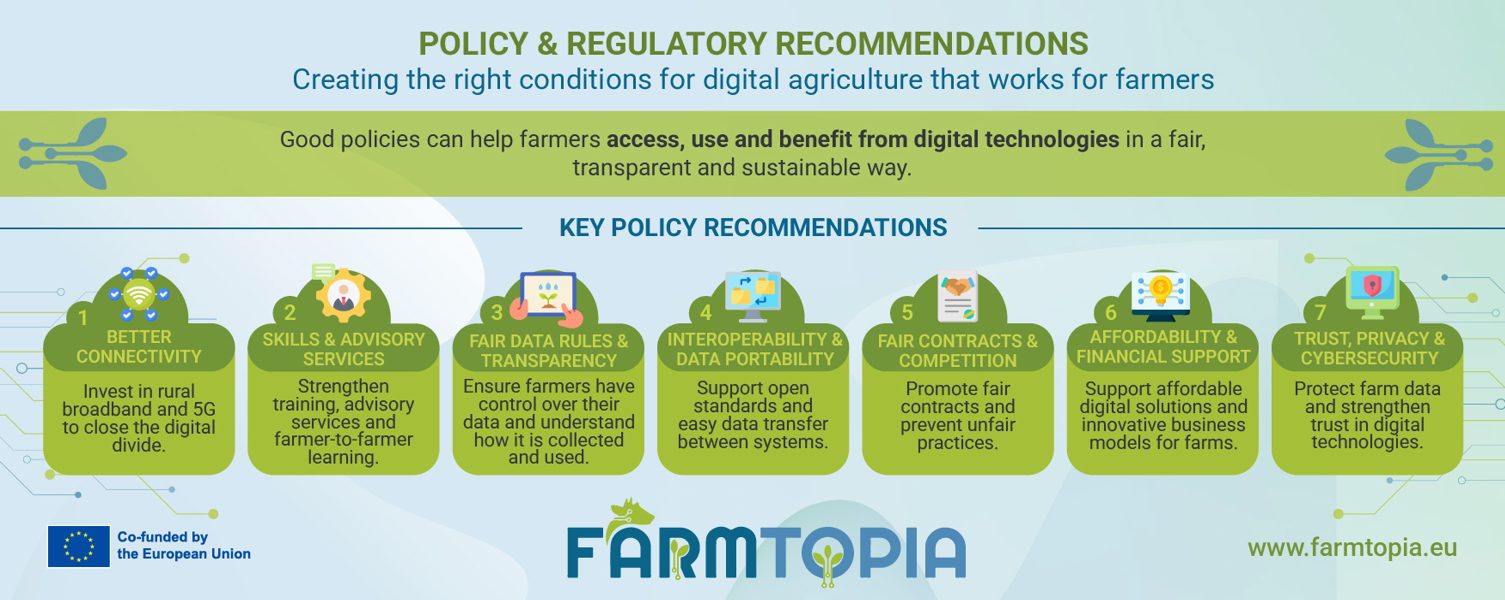
As well as validating digital solutions on real farms, Farmtopia has drawn up policy and regulatory recommendations to facilitate access to digital agriculture for small and medium-sized farms. These recommendations address issues such as connectivity, digital skills, advisory services, data ownership, interoperability and fair contractual terms.
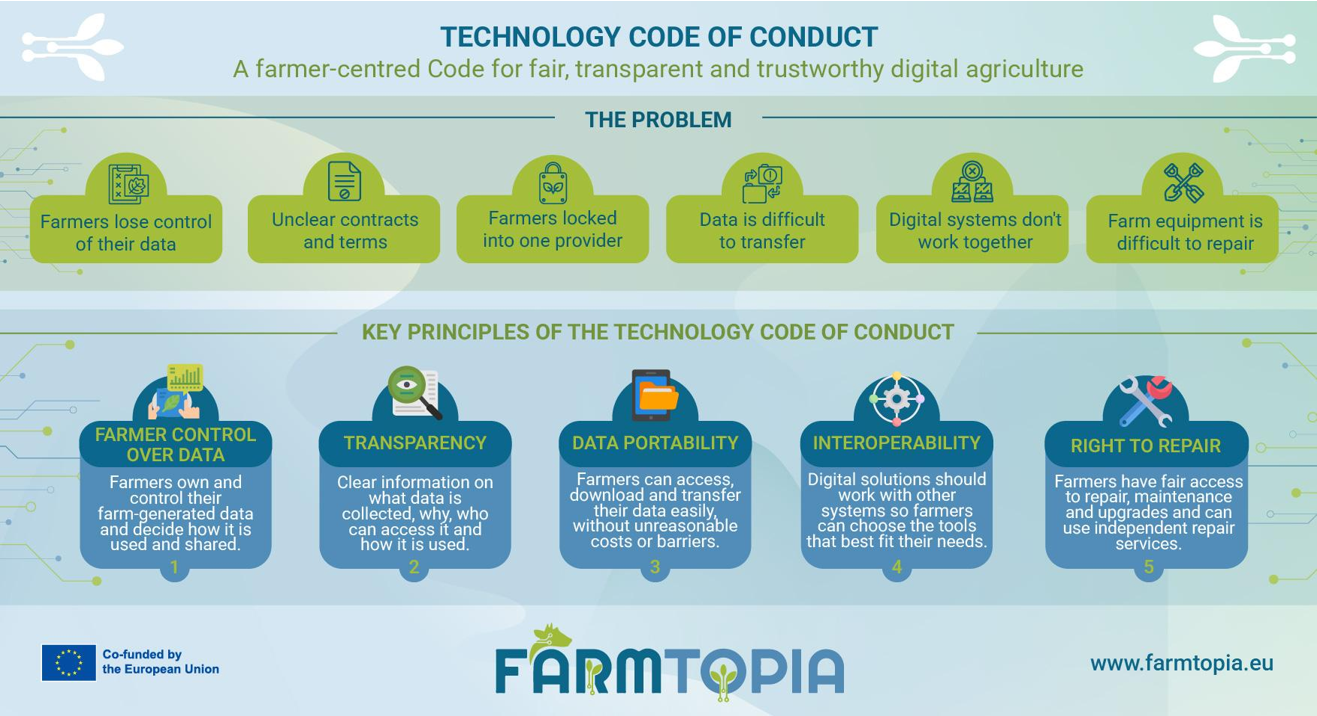
The project has also developed a farmer-centred Technology Code of Conduct, designed to promote a more transparent, fair and responsible use of digital technologies. Farmtopia thus provides a set of practical tools, proven solutions and guidance to help move towards a more inclusive, sustainable and resilient European agriculture.
Farmtopia has received funding from the European Union’s Horizon Europe research and innovation programme.